

Air freight is one of the fastest and most reliable ways to move goods internationally, but pricing can vary significantly depending on your shipment.
If you want a simple answer, air freight in the UK typically costs between £3 and £10 per kg. However, this range only gives a general indication and does not reflect the full complexity of pricing.
Your actual cost depends on several variables, including weight, dimensions, shipping route, urgency, and current market conditions. In 2026, factors such as fuel price volatility, global demand, and airspace disruption are also influencing rates.
This guide explains exactly what you can expect to pay, what drives those costs, and how you can reduce your spend without risking delays.
What does air freight cost in the UK?
Air freight pricing in the UK is not fixed because every shipment moves through a different combination of routes, carriers, and handling processes, which is why working with an experienced air freight forwarder can make a significant difference to both cost and how reliable the forwarding service is. Unlike standard parcel delivery, pricing reflects how your goods interact with global logistics infrastructure, not just distance alone.
Most shipments fall within a typical range of £3 to £10 per kg, but this can shift depending on size, urgency, and current market conditions. Smaller or urgent shipments often sit at the higher end, while larger, well-planned consignments can get more competitive rates.
It is important to treat this range as a benchmark rather than a guaranteed cost. The only way to determine an accurate price is to assess the specific details of your shipment.
What is the average cost of air freight per kg?
Air freight is commonly priced per kilogram, but the actual rate varies depending on how your shipment is handled and prioritised within airline capacity. This means the “average cost” is always a guide rather than a fixed rule.
Typical pricing examples include:
- China to UK: £2.90 to £4.50 per kg
- USA to UK: £1.50 to £5 per kg
- Express air freight: Higher rates for faster delivery
- Standard air freight: Lower cost with slightly longer transit times
In many cases, airlines apply minimum charges, which means very small shipments may not benefit from lower per-kg rates.
What factors affect air freight costs?
Air freight pricing is shaped by a combination of physical shipment characteristics, operational logistics, and wider market conditions. These factors determine how your goods are prioritised, routed, and priced within the global air cargo network.
Understanding these variables allows you to make better decisions around shipping methods, timelines, and cost control. It also helps you identify where costs can be reduced without affecting the reliability of the service itself.
How does weight and volume impact pricing?
Air freight pricing is designed to balance both weight and space, as aircraft capacity is limited by both factors. This means your shipment is not simply priced on how heavy it is, but also how much physical room it occupies within the cargo hold.
To manage this, airlines calculate chargeable weight, which compares the actual weight of your goods against their volumetric weight. If your shipment is large but lightweight, you will be charged based on the space it takes up rather than its physical weight.
This is particularly important for businesses shipping bulky items such as packaging, textiles, or low-density products, where inefficient packing can significantly increase costs.
How does distance and route affect cost?
Air freight pricing is not determined by distance alone. The route your shipment takes, the number of connections involved, and the availability of cargo capacity all play a role in how your shipment is priced.
Well-established routes, such as China to the UK, have frequent flights, which creates competitive pricing. In contrast, less common routes or those requiring multiple transfers often involve additional handling, leading to higher costs.
Strategic route planning can reduce unnecessary expenses, especially when alternative hubs or carriers offer more cost-effective options without significantly increasing transit time.
How does urgency change pricing?
Urgency determines how your shipment is prioritised within airline operations, and this has a direct impact on cost. When speed is critical, airlines allocate premium space and prioritise handling, which increases pricing.
Express air freight services provide the fastest transit times, but they come with higher costs due to priority loading, faster processing, and reduced flexibility in scheduling.
If your shipment allows for even a small degree of flexibility, deferred or standard air freight services can reduce costs by using available capacity more efficiently. In many cases, adjusting delivery timelines by a few days can result in meaningful savings without affecting the reliability of the delivery service.
What additional charges should you expect?
The headline air freight rate often represents only part of the total cost. A complete shipment involves multiple stages, each with its own associated charges.
Beyond the airline rate, costs typically include fuel surcharges, security fees, handling charges, and customs clearance, which ensures your goods move through UK borders without delays, as well as final delivery.
Understanding how these costs are structured is essential, as unclear or incomplete quotes can lead to unexpected increases. A well-prepared quote should clearly outline what is included, what is variable, and what may change based on current conditions.
Why are air freight costs changing in 2026?
Air freight pricing is not static and can change rapidly depending on global economic conditions, supply chain disruption, and airline capacity. In recent years, these fluctuations have become more noticeable, making it harder to rely on standard pricing assumptions.
In 2026, several key factors are driving changes in air freight costs. These are not temporary shifts but ongoing influences that affect how goods are transported worldwide.
How do fuel prices impact air freight costs?
Fuel is one of the most significant operational costs in air freight, and even small changes in fuel pricing can have a noticeable impact on shipping rates. Airlines apply fuel surcharges to reflect these fluctuations, meaning costs can rise or fall depending on market conditions.
In recent years, fuel price volatility has made air freight pricing less predictable, particularly on long-haul routes. This is why quotes are often time-sensitive and may change if booking is delayed.
For businesses shipping regularly, monitoring fuel trends and planning shipments accordingly can help reduce exposure to sudden cost increases.
How do global disruptions affect air freight pricing?
Air freight operates within a global network, so disruptions in one region can affect pricing and availability worldwide. Events such as airspace restrictions, political instability, and regional conflicts like the Russia Ukraine War, or more recently the 2026 Iran war can force airlines to alter routes or reduce capacity.
When flights are rerouted or delayed, operational costs increase, which is then reflected in freight rates. At the same time, reduced capacity can create competition for space, further driving up prices.
These disruptions are often outside your control, but understanding their impact allows you to plan more effectively and reduce risk.
Why is demand increasing for air freight?
Demand for air freight has grown steadily as businesses prioritise speed and reliability in their supply chains. The rise of e-commerce, shorter delivery expectations, and the need for rapid stock replenishment have all contributed to this increase.
As demand rises, available cargo space becomes more competitive, particularly during peak seasons. This leads to higher pricing and reduced flexibility for last-minute bookings.
For businesses, securing capacity early and planning shipments carefully is becoming increasingly important.
Is air freight more expensive than sea freight?
Comparing air freight with alternatives such as sea freight for larger or less time-sensitive shipments is one of the most common decisions businesses face when planning international logistics. While air freight is generally more expensive, the difference is not just about cost, but about speed, reliability, and business impact.
Choosing the right method depends on your priorities. In some cases, paying more for faster delivery prevents lost revenue or operational delays, making air freight the more cost-effective option overall.
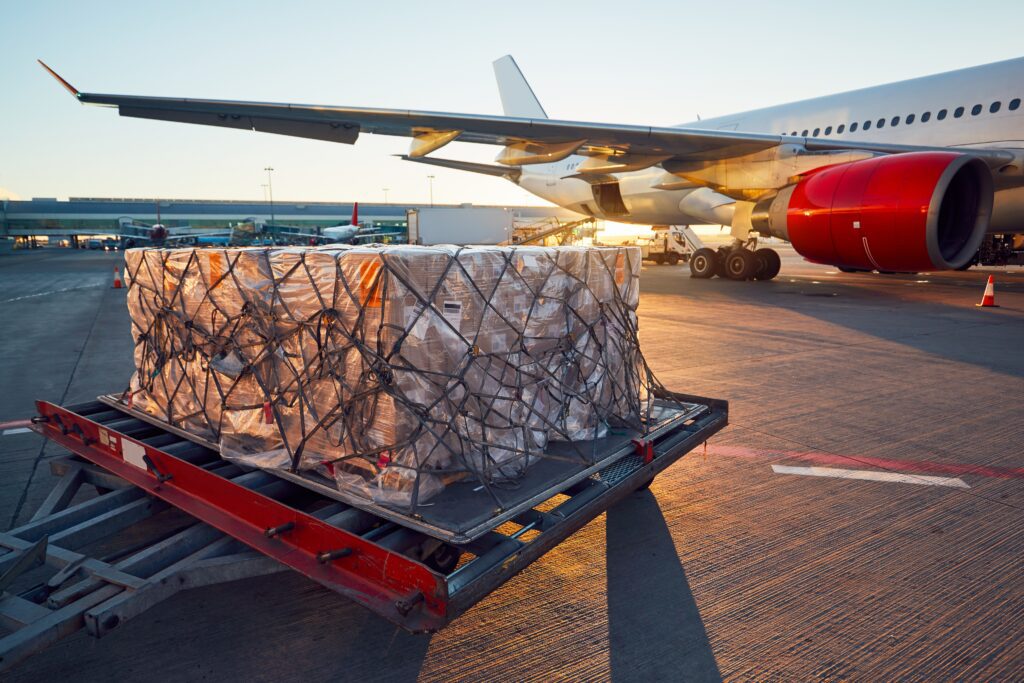
When is air freight worth the cost?
Air freight becomes the right choice when speed and reliability have a direct impact on your business performance. While the upfront cost is higher, the value comes from maintaining supply chain continuity and avoiding disruption.
Understanding when to use air freight helps you avoid unnecessary expense while ensuring critical shipments arrive on time, particularly in time-sensitive industries.
How can you reduce air freight costs without risking delays?
Reducing air freight costs is not about choosing the cheapest option available. Instead, it involves improving efficiency across your shipment planning, packaging, and routing decisions.
By identifying where costs are created and how they can be controlled, you can lower your overall spend without compromising delivery speed or reliability.
Can consolidating shipments lower your cost per kg?
Consolidation reduces costs by combining multiple shipments into a single consignment, allowing fixed charges to be spread across a larger volume of goods. This improves cost efficiency and often results in better per-kg pricing.
For businesses that ship regularly, consolidation is one of the most effective ways to reduce overall freight spend.
How does planning ahead reduce air freight costs?
Planning ahead gives you access to a wider range of flight options and pricing tiers. When shipments are booked at short notice, choices become limited, often forcing you into higher-cost services.
By scheduling shipments in advance, you can take advantage of more cost-effective routes and avoid premium charges.
Why does packaging optimisation matter?
Because air freight is priced using volumetric weight, inefficient packaging directly increases costs. Excess space within packaging leads to higher chargeable weight, even if the goods themselves are lightweight.
Optimising packaging reduces wasted space and improves cost efficiency.
Can choosing the right route and service level save money?
Different routes and service levels come with varying pricing structures. Without careful planning, businesses can end up paying for faster services or more direct routes than necessary.
Selecting the right combination ensures you only pay for what your shipment actually requires.
How does working with a freight forwarder reduce hidden costs?
Many unexpected costs arise from avoidable issues such as incorrect documentation, inefficient routing, or customs delays.
A freight forwarder manages these risks by ensuring accuracy, transparency, and efficiency throughout the shipping process, helping you avoid unnecessary costs.
How do you get an accurate air freight quote?
Accurate pricing depends on providing complete shipment information from the start. Without this, quotes are often estimates that may change later.
To receive a reliable quote, you need:
- Shipment weight
- Dimensions
- Origin and destination
- Type of goods
- Required delivery timeframe
Providing accurate details ensures your quote reflects real conditions.
Ready to get a clear air freight cost?
Air freight costs depend on multiple factors, and pricing can change quickly due to fuel prices, demand, and route availability. This makes it difficult to rely on general estimates when planning your shipments.
Working with experienced freight forwarders like Power Forwarding gives you accurate pricing, reliable timelines, and the confidence that your goods will arrive safely and as quickly as possible.
Contact our team today to get a tailored air freight quote and move your goods with confidence.
Recommended Articles
Should You Choose Sea Freight or Air Freight

